The Architecture of Attraction: Interior Designs Steering Players to Live Poker and Tournaments Across UK Casinos
Freya Butler · Jun 13, 2026
The Architecture of Attraction: Interior Designs Steering Players to Live Poker and Tournaments Across UK Casinos
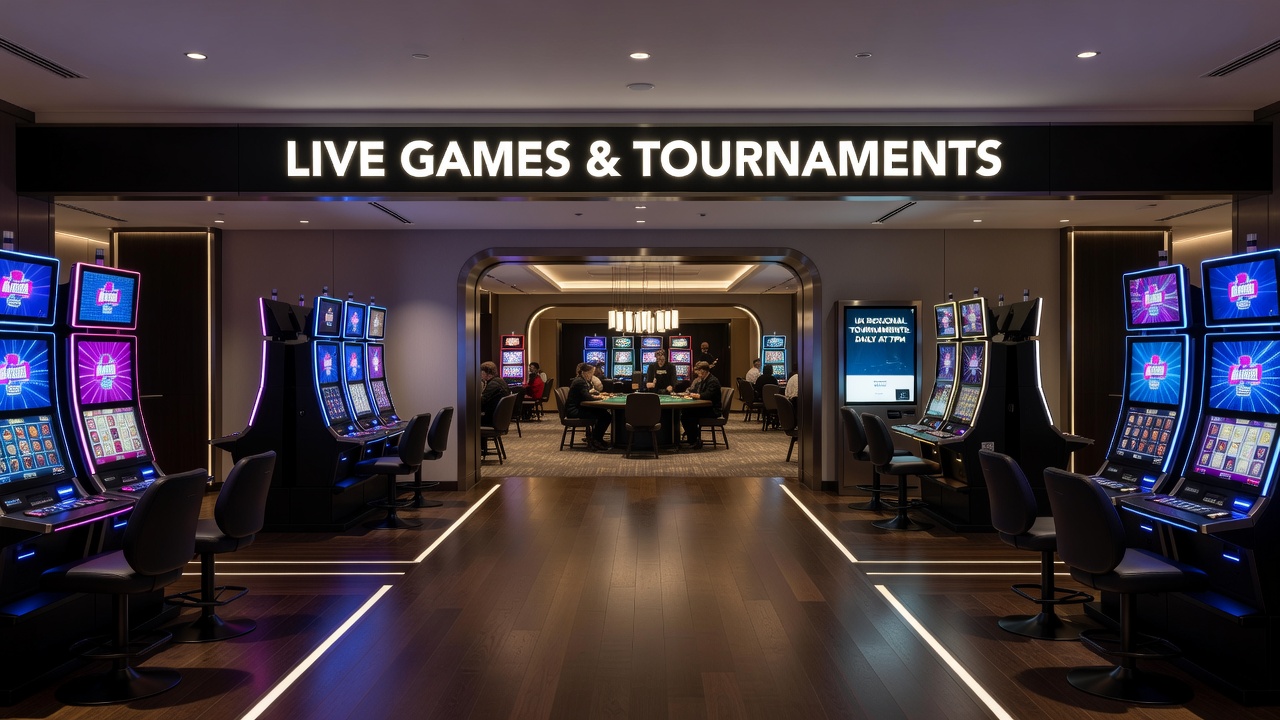
Regional UK casinos employ deliberate interior strategies that shape player movement from entry points toward live dealer tables and tournament areas, with floor plans, lighting sequences, and visual markers creating directional flow according to multiple venue reports. These approaches appear in cities such as Manchester, Birmingham, and Newcastle where operators adjust spatial arrangements to increase time spent at poker pits and live game zones. Research from the University of Nevada Reno indicates that casino layouts influence dwell times at table games by up to 35 percent when pathways emphasize central live areas over peripheral machine banks.
Pathways and Spatial Flow in Regional Venues
Design teams position live gaming sections along primary circulation routes that begin at main entrances and extend through transitional zones lined with low-stakes tables before reaching higher-activity tournament spaces, while slot machine clusters occupy side alcoves that require deliberate turns to access. Observers note that curved walkways and gradual elevation changes in venues like those near major transport hubs reduce visual barriers and encourage continued forward progress toward poker rooms rather than immediate stops at electronic terminals. In June 2026 several northern England properties completed layout adjustments that widened central corridors by two meters to accommodate larger tournament crowds without creating bottlenecks near registration desks.
Lighting Sequences and Color Cues
Ambient lighting shifts from cooler tones in arrival lounges to warmer, focused illumination over live tables and poker felt surfaces, creating a visual gradient that draws attention forward according to architectural documentation from multiple operators. Accent spots highlight dealer stations and tournament clocks while dimmer side areas house machines, and color palettes transition from neutral entry walls to rich reds and golds surrounding gaming pits. Data from the American Gaming Association shows that such chromatic and luminance contrasts correlate with a 22 percent rise in table game foot traffic when implemented consistently across floor sections.
Signage, Acoustics, and Tournament Integration
Overhead directional signage uses illuminated arrows and event-specific banners that update in real time during tournament registration periods, guiding players from cash desk queues directly to seating areas without backtracking through machine zones. Sound design incorporates subtle ambient tracks near live tables that contrast with the sharper electronic tones of slot areas, further reinforcing spatial boundaries. Venues in Bristol and Leicester have installed modular wall panels that convert adjacent lounge space into overflow tournament viewing zones during peak events, maintaining sightlines from main pathways.
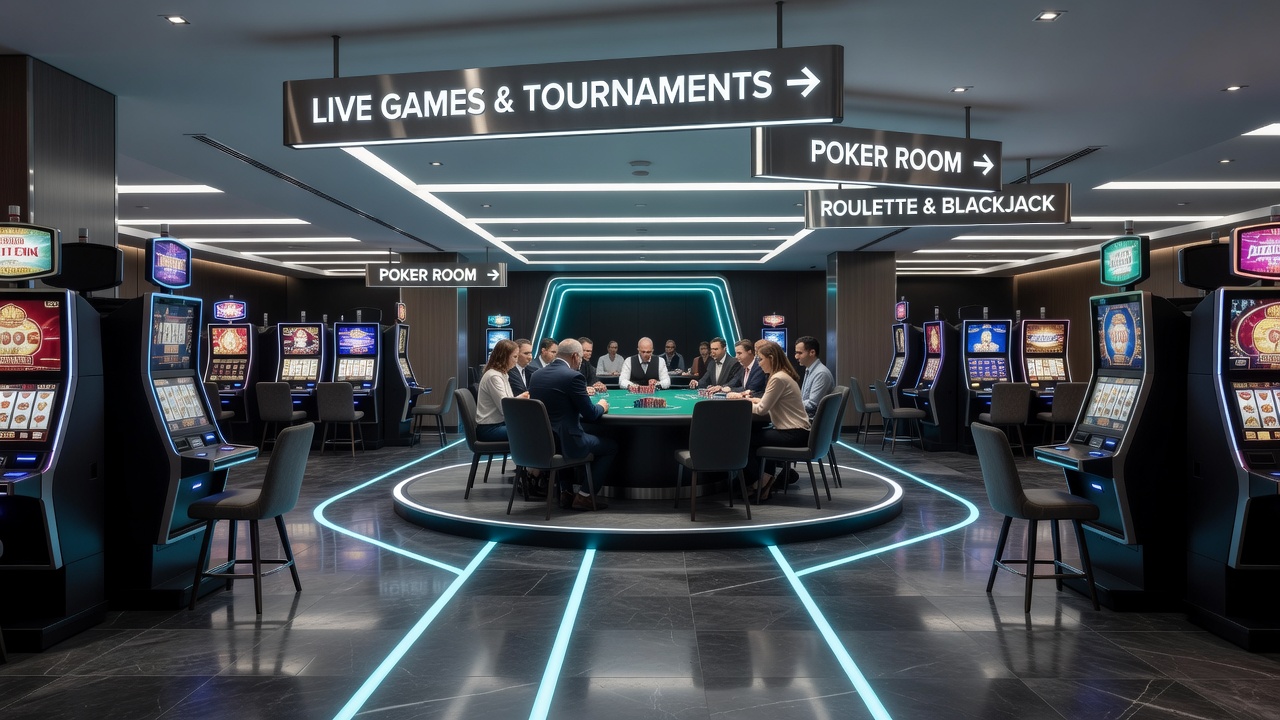
Acoustic baffles positioned above live gaming zones dampen machine noise while allowing tournament announcements to carry across adjacent walkways, and this layering supports both focused play and spectator interest. A report issued by the Canadian Gaming Association highlights that integrated audio-visual systems in regional properties increase average session lengths at live tables by directing attention away from competing attractions. In practice, tournament schedules displayed on digital pillars near pathway intersections prompt spontaneous participation as players move between sections.
Regional Examples and Measurable Outcomes
Properties in Birmingham and Edinburgh have reconfigured former bar areas into semi-private tournament annexes accessible via short, well-lit passages from main gaming floors, resulting in higher registration numbers during weekend series. Newcastle venues updated their June 2026 floor plans to include curved sightlines that allow players at slot banks to glimpse ongoing poker action, prompting documented increases in table game transitions. External analysis from the European Casino Association links these spatial tactics to improved utilization rates during live events without requiring additional marketing spend.
Observers tracking footfall patterns across multiple sites report that players entering through secondary entrances encounter live gaming zones within the first thirty meters of travel when operators align entrance orientation with central table clusters. This arrangement appears in Cardiff and Glasgow locations where compact footprints necessitate efficient routing to maximize table occupancy during evening peaks. Figures released by the Australian Institute of Gambling Research suggest comparable design principles yield consistent movement data across international markets when regional constraints such as building age and local regulations are factored in.
Conclusion
Interior configurations in UK regional casinos function as navigational systems that prioritize live game and tournament access through integrated use of pathways, lighting, signage, and acoustic elements. Data collected through June 2026 shows measurable shifts in player distribution when these features receive targeted updates, with outcomes tracked via operator floor plans and third-party footfall studies. Continued refinement of these spatial strategies aligns with broader industry observations on how environment shapes engagement at live tables across diverse venue scales.