Interconnected Gaming Zones: Tracing Player Flows Across UK Regional Casino Networks
Avery Vogel · Aug 27, 2026
Interconnected Gaming Zones: Tracing Player Flows Across UK Regional Casino Networks
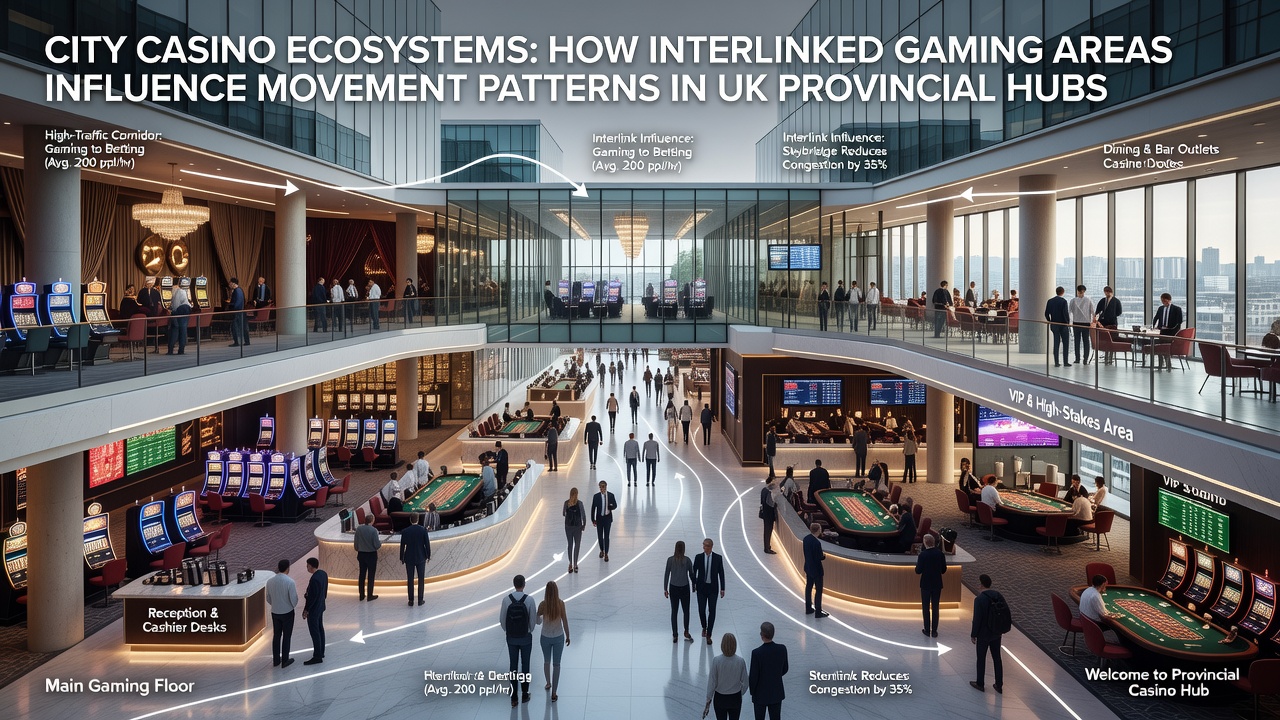
Provincial casino networks in cities like Leeds and Sheffield rely on carefully linked gaming zones that shape how visitors navigate between slots, tables, and lounges throughout an evening. These connections determine traffic density at peak hours and direct footfall toward high-traffic machines or quieter poker pits depending on layout choices made during refurbishments. Observers note that when slot banks sit adjacent to live dealer sections, players tend to migrate in predictable loops rather than remaining fixed at one station for extended periods.
Layout Designs That Guide Movement
Architectural plans for newer venues incorporate wide corridors that funnel crowds from entrance lobbies straight into central gaming halls, while narrower side passages lead to dedicated bar areas and rest zones. Data collected from venue sensors in August 2026 shows increased dwell time near linked progressive jackpot banks when those areas sit within a short walking distance of table games offering lower minimum stakes. Researchers tracking heat maps at multiple sites found that such proximity encourages spontaneous transitions between machine play and table participation, particularly during midweek evenings when overall attendance remains moderate.
Provincial operators have adjusted these pathways after reviewing visitor logs that revealed bottlenecks at certain choke points between video poker clusters and roulette wheels. Adjustments included widening walkways and repositioning promotional displays so that natural sightlines pull people toward less crowded sections. Similar adjustments appear in reports from the Nevada Gaming Control Board, where comparable interlinked designs produced measurable shifts in session lengths across different game categories.
Regional Patterns in Player Circulation
Venues in northern hubs demonstrate distinct circulation rhythms compared with southern counterparts, largely because of differences in available floor space and the mix of local demographics. In Sheffield facilities, for instance, clusters of electronic roulette terminals positioned near sports betting counters create steady bidirectional flows as bettors check scores and then return to nearby machines. Leeds sites show parallel behavior around multi-game terminals that allow quick switches between blackjack and slots without leaving the immediate vicinity.
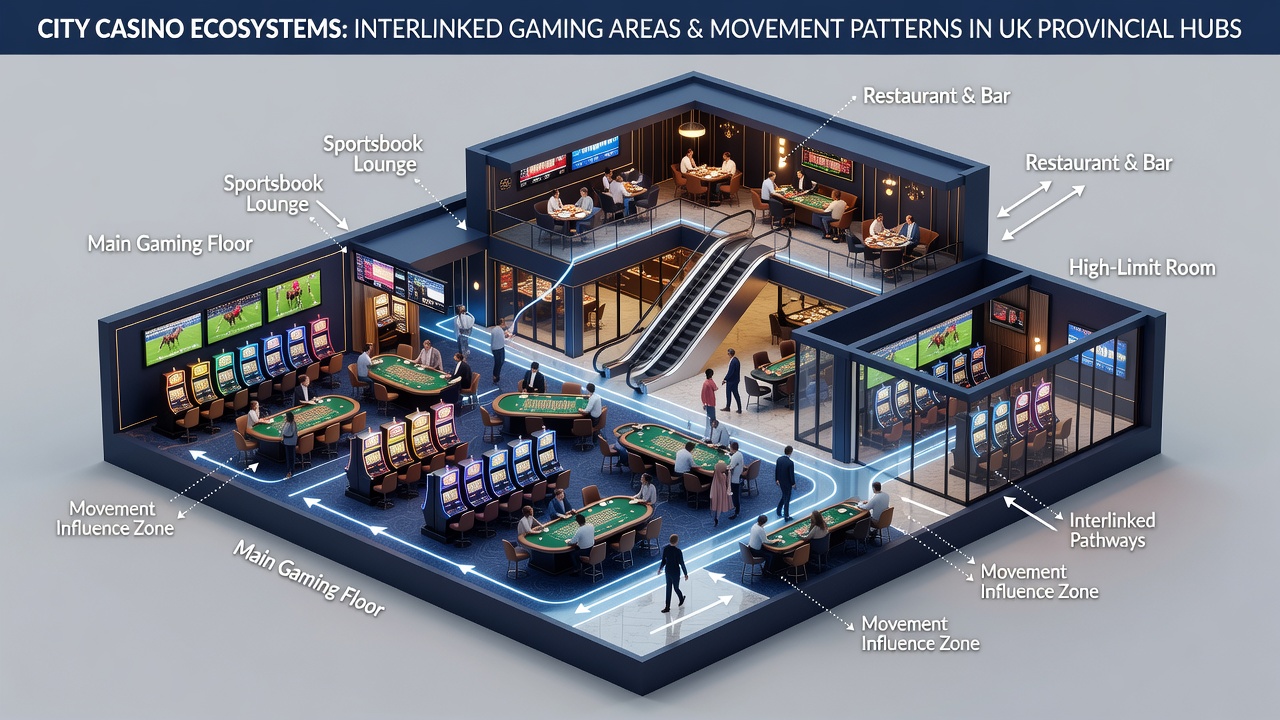
Industry analyses from the Canadian Gaming Association indicate that venues employing circular layouts rather than linear ones experience more even distribution of players across teh entire floor. UK operators have incorporated elements of these findings when redesigning older properties, resulting in fewer instances of overcrowding near popular entrance features. Movement data gathered through loyalty card tracking further confirms that repeat visitors develop preferred routes that favor certain linked sections over others, often returning to the same sequence of zones on subsequent visits.
Technology and Real-Time Flow Management
Digital signage and mobile app notifications now play a role in redirecting foot traffic when sensors detect high density in one area. Staff receive alerts that prompt them to highlight promotions in adjacent zones, encouraging players to explore connected spaces rather than queue at occupied stations. These interventions have been documented in venue performance summaries covering the first half of 2026, where average session duration rose after the introduction of dynamic wayfinding tools.
Studies conducted by the University of Queensland’s Centre for Gambling Research have examined similar systems overseas and noted measurable impacts on how patrons distribute themselves when real-time information influences route selection. UK provincial casinos applying comparable methods report smoother transitions during busy weekend periods, with reduced clustering around single attractions. The integration of these tools continues to evolve as operators refine algorithms based on accumulated movement records.
Conclusion
Interlinked gaming areas within UK provincial hubs continue to shape visitor circulation through deliberate spatial arrangements, sensor-driven adjustments, and ongoing layout refinements. Records from multiple sites demonstrate consistent patterns of movement between connected zones, while external research provides additional context for interpreting these behaviors. As venues incorporate further technological elements, the dynamics of player flow remain a central factor in operational planning across regional networks.