Decoding Casino Cartography: How Venue Layouts Guide Player Routes and Tournament Flows in Britain's Key Gambling Hubs
Avery Vogel · Jun 8, 2026
Decoding Casino Cartography: How Venue Layouts Guide Player Routes and Tournament Flows in Britain's Key Gambling Hubs
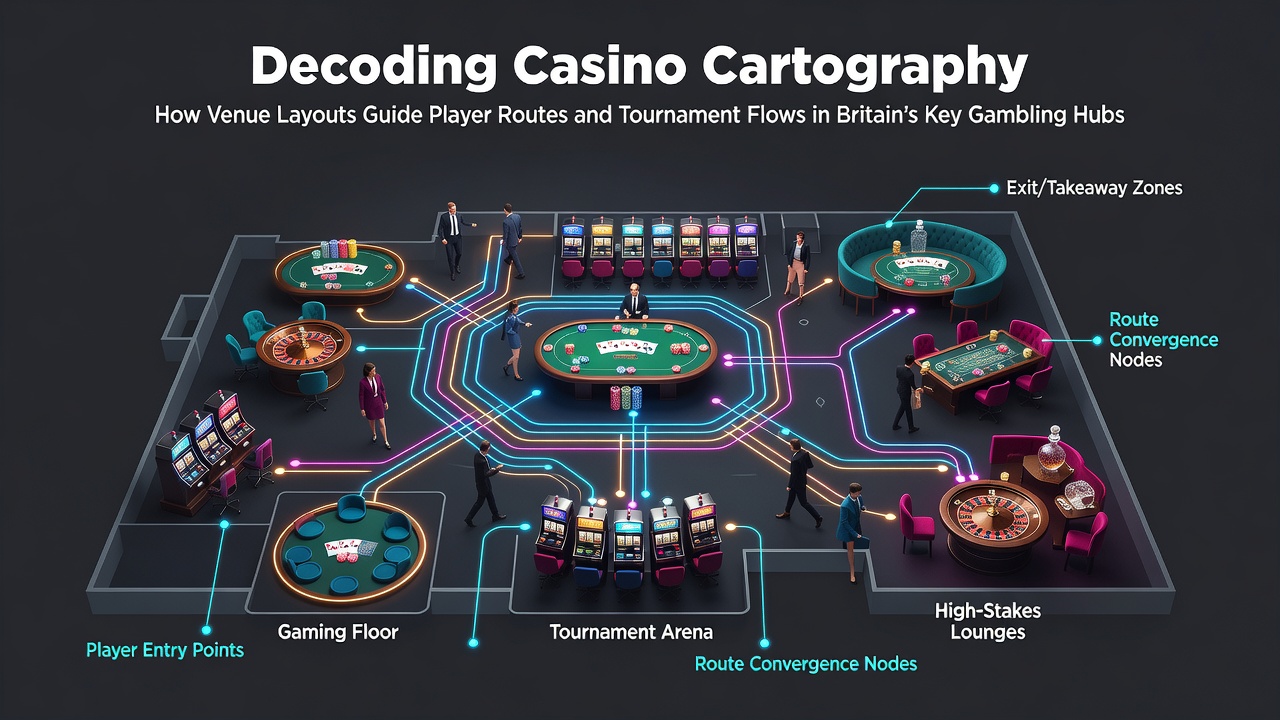
Britain's prominent gambling destinations feature carefully planned interiors where entrances funnel visitors past high-visibility gaming zones before they reach quieter tournament areas, and data from industry reports shows how these routes shape daily foot traffic patterns. Observers note that London venues often position live dealer tables near main lobbies while poker pits occupy secondary spaces, which creates a natural progression that moves casual players toward higher-stakes sections without abrupt shifts. According to research from the UNLV Center for Gaming Research, such arrangements draw from established design principles that increase time spent on the floor by directing sightlines and pathways.
Layout Patterns Across Major Hubs
Manchester casinos incorporate wide central aisles that connect slot banks directly to tournament registration desks, and this configuration allows event participants to navigate without crossing busy table areas during peak evening hours. Birmingham properties follow similar logic by clustering food outlets midway between entry points and poker rooms, which encourages brief stops that extend overall visits. Edinburgh venues place their primary tournament stages against back walls visible from multiple angles, and studies indicate this visibility boosts spectator interest while guiding competitors along predefined routes that minimize congestion.
Those who've examined floor plans across these cities report consistent use of curved pathways rather than straight lines, since the design reduces perceived walking distances and maintains engagement with surrounding games. In June 2026 several operators introduced updated digital wayfinding screens that integrate with these physical layouts, providing real-time tournament updates at key junctions throughout each venue.
Tournament Flow Mechanics
Poker events in these hubs typically begin with registration counters located near secondary entrances, which separates the influx of players from regular gaming traffic and maintains steady movement toward designated seating zones. Data shows that venues using this separation achieve faster table assignments during multi-day series because routes avoid overlap with live dealer areas. Birmingham and Manchester properties have adopted staggered entry points for different tournament levels, and this approach prevents bottlenecks at peak registration times while directing observers along adjacent walkways that showcase ongoing cash games.
Regional Variations in Route Design
London establishments often feature multi-level designs where escalators and staircases channel players upward from ground-floor slots toward upper-level tournament pits, and industry analyses link this vertical movement to increased cross-promotion between game types. Edinburgh casinos instead rely on single-level spreads with poker zones positioned at the far end of elongated gaming floors, which creates a deliberate journey that passes multiple table games along the way. Researchers at the University of Nevada have documented how these choices influence participation rates, with longer routes correlating to higher incidental play before events commence.
Cardiff and Liverpool sites apply comparable strategies by anchoring tournament areas near exits yet ensuring clear signage pulls attendees through high-traffic zones first. Observers note that such placements balance accessibility with revenue goals, since participants encounter additional gaming options during both arrival and departure.

Integration of Technology and Physical Design
Digital overlays now complement traditional layouts in many British venues, with mobile apps directing users along optimized routes based on real-time occupancy data. Newcastle properties, for instance, use these systems to reroute tournament crowds away from crowded live dealer sections during busy periods, and figures from gaming associations reveal measurable reductions in average transit times. Glasgow casinos have tested beacon technology that triggers location-specific tournament alerts, guiding participants while they move through slot and table areas without requiring staff intervention.
These technological additions build on longstanding architectural choices rather than replacing them, and reports from the Canadian Gaming Association highlight similar hybrid approaches in other markets that maintain physical flow while adding layers of information. In practice the combination keeps players engaged across longer periods by reducing friction between different activity zones.
Conclusion
Venue layouts in Britain's key gambling locations continue to evolve through deliberate placement of entrances, tables, and tournament spaces that steer movement patterns toward balanced engagement across game types. Evidence from multiple research sources demonstrates how these cartographic decisions affect both casual exploration and structured event participation, with regional adaptations reflecting local venue constraints and player volumes. As operators refine pathways in response to usage data, the underlying principles remain focused on creating coherent journeys that connect all areas of each property without unnecessary interruptions.